The Doorway That Holds a Scene Open
Learn how a doorway in a film frame directs attention, divides a scene and makes an entrance feel delayed, anticipated or emotionally charged.
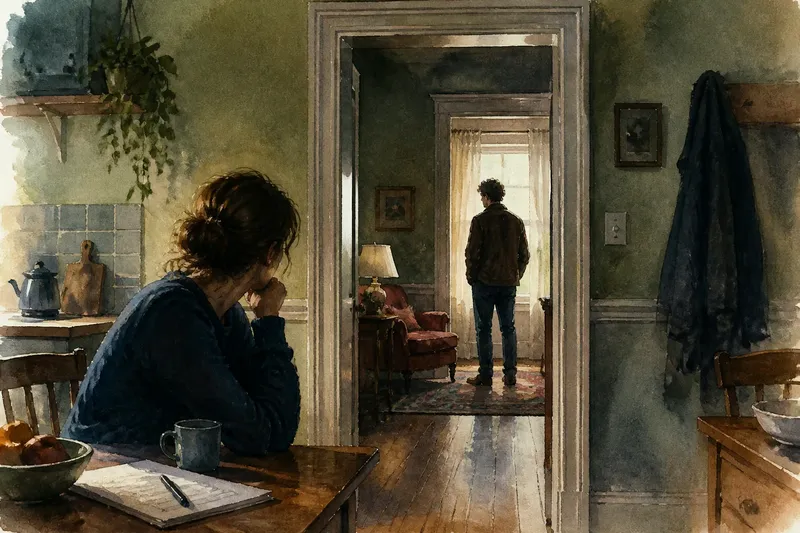
The common mistake in reading a doorway on screen is to treat it as background architecture. A doorway placed within the frame can divide a character from the action, guide the eye towards an arrival, or make a simple entrance feel like a decision still being made. Notice where the frame puts the opening, and it becomes easier to see how the scene controls your attention.
How does a doorway in a film frame direct attention?
A doorway directs attention by giving the eye a strong shape to follow. Its vertical edges form a frame inside the larger frame, so a viewer may notice the opening before noticing what is beyond it. The director can use that shape to organise competing details without moving the camera or adding dialogue.
Position matters. An opening near the centre can become a visual destination; one near the edge can pull attention sideways or leave a character only partly visible. Light and contrast reinforce the effect. A bright corridor behind a darker room may draw the eye outward, while a shadowed doorway can hold attention because its interior is hard to read.
The doorway also gives the viewer a route through the image. A character looking towards it, a body angled towards it, or an object placed along that line can lead the eye to the threshold. If these cues point in different directions, the frame may feel unsettled; if they converge, the opening can seem like the scene’s obvious next destination.
Why does a doorway create a visible boundary?
A doorway marks a change of space while keeping both sides visible. The room and the space beyond it may belong to different parts of a character’s life, different social groups, or different levels of safety. Because the threshold is physically legible, the viewer can understand the separation before anyone explains it.
That division need not be a simple opposition between inside and outside. A character standing in the opening occupies both spaces at once: partly sheltered, partly exposed. The frame can make that in-between position visible by keeping the character aligned with the jamb, the vertical side of the opening, rather than placing them fully in either room.
Imagine a scene in which a character sits at a kitchen table while a family member waits in the hall. If the camera keeps the doorway between them, the viewer can read their distance even when they exchange polite words. If the waiting character crosses the threshold, that movement changes the composition and may feel like a change in the relationship, not merely a change of location.
How can a doorway make an entrance feel delayed?
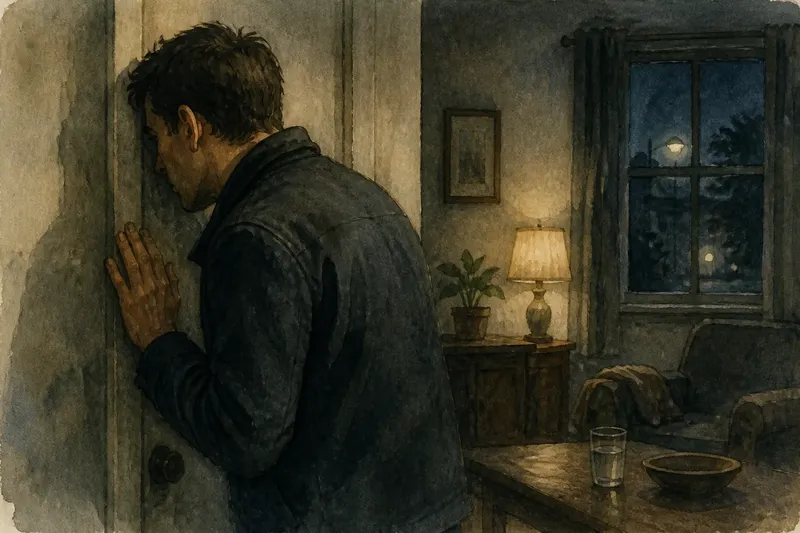
A doorway delays an entrance when the scene gives the viewer signs of someone approaching but withholds the person. A shadow shifts on the wall, a figure pauses beyond the frame, or another character keeps glancing towards the opening. The viewer begins to expect an arrival, and the empty threshold becomes active rather than vacant.
Framing can stretch that expectation. A camera may hold on the person waiting inside, leaving the doorway visible but unoccupied. Alternatively, it may show the doorway while keeping the approaching figure just outside the frame. In either case, the scene makes the viewer watch a boundary for change. The delay can suggest hesitation, caution or an effort to control how an encounter begins.
The timing of the crossing matters as much as the approach. A character who appears immediately after a glance may seem expected; one who waits through another action can seem reluctant or deliberately withheld. Editing can lengthen or shorten the wait, but the doorway supplies a clear visual measure: the audience can see that the expected space remains empty.
When does a doorway make an arrival feel anticipated?
An arrival feels anticipated when the composition prepares the viewer to look towards the entrance before the character appears. A character may turn their head, leave a gap in a group, or place an object near the threshold. These choices make the doorway feel appointed for someone, even if the audience does not yet know who will arrive.
Anticipation is not the same as suspense. The viewer may expect a familiar person and simply wait to see how the meeting unfolds. The doorway can still shape that expectation by keeping the entrance visible through a conversation or by arranging the characters so that one has a clear view of it and another does not. Their different sightlines tell us who is prepared for the arrival.
Say a character in a drawing room keeps a chair turned towards the open doorway while speaking to a visitor. The chair’s angle quietly suggests that the seated character expects someone else. If the expected person then appears, the viewer can recognise the earlier preparation; if the doorway stays empty, that same arrangement may read as misplaced confidence. The composition creates an expectation without needing to state it.
What should you look for in a doorway composition?
Does the doorway sit in the centre or at the edge?
A central opening tends to attract attention as a destination, while an edge placement can make the entrance feel peripheral or easy to miss. Check whether the characters’ positions support that emphasis or resist it.
Can you see what lies beyond the threshold?
A clearly visible adjoining space lets the viewer anticipate movement through it. A dark or obstructed space makes the doorway a limit on knowledge, so attention gathers around what remains unseen.
Who can see the entrance?
Compare each character’s eye-line and body position. If one person watches the doorway while another has their back to it, the frame can establish unequal awareness before the dialogue catches up.
What changes when someone crosses the threshold?
Notice whether the entrant alters the balance of the frame, blocks a view, or separates two characters. The crossing may matter because it changes who shares the same space, not simply because a person has arrived.
What is not worth over-reading in a doorway shot?
Not every visible door carries a hidden symbolic message. A doorway may be present because the room’s layout makes it the natural way to stage an exchange. Look for repeated emphasis, deliberate alignment, a held view or a meaningful change when someone crosses before assigning it a larger meaning.
It is also rarely useful to treat the doorway as a fixed symbol, such as freedom or danger, regardless of context. Ask what it does in this particular frame: does it organise attention, separate people, conceal an arrival, or make a crossing feel consequential? That question keeps the reading tied to visible choices rather than guesswork.
For a useful doorway-in-film-frame reading, watch the composition before and after the threshold changes: where your eye goes, who can see the entrance, and whether a crossing alters the space between characters. The doorway’s meaning often lies in that small shift, especially when the scene lets you wait for it.