A One-Scene Rewatch for Following a Character’s Goal
A one-scene rewatch for following a character’s goal helps you see how a request, refusal or reaction redirects the scene without losing its quiet detail.
The common mistake in a one-scene rewatch is trying to notice everything at once: the framing, the cut, the music, every glance and every line. That turns a quiet evening into a hunt for clever details, and the character’s immediate goal can disappear beneath them. A one-scene rewatch for following a character’s goal is more useful when each viewing has a different, limited question.
Choose a short scene with a clear encounter: a character asks for something, tries to avoid something, or wants another person to respond in a particular way. Watch it once to identify that immediate aim. Then replay it to see which actions or reactions alter the aim, the character’s tactics or their understanding of what is possible. The point is not to solve the whole film. It is to notice how the scene changes direction.
What does “goal” mean inside a scene?
A character’s goal is what they are trying to get or prevent in the present encounter. It is narrower than a life ambition and more active than a general feeling. A character may want their sister to hand over a key, for example; “they are anxious” describes a state, while “they want the key before the sister leaves” identifies a playable aim.
Keep the goal provisional. A character’s words may conceal it, and an actor may make a simple request sound like a test of loyalty. You do not need to decide what the character secretly wants in the whole story. Write down a plain-language guess that fits the scene’s visible action, then let later moments revise it.
It also helps to distinguish a goal from a tactic. The goal is the result the character wants; a tactic is what they try in order to get it. They may flatter, bargain, joke, threaten, or fall silent. A tactic can change while the goal stays steady. Or a response can make the character abandon one goal and pursue another.
Which scene is worth replaying?
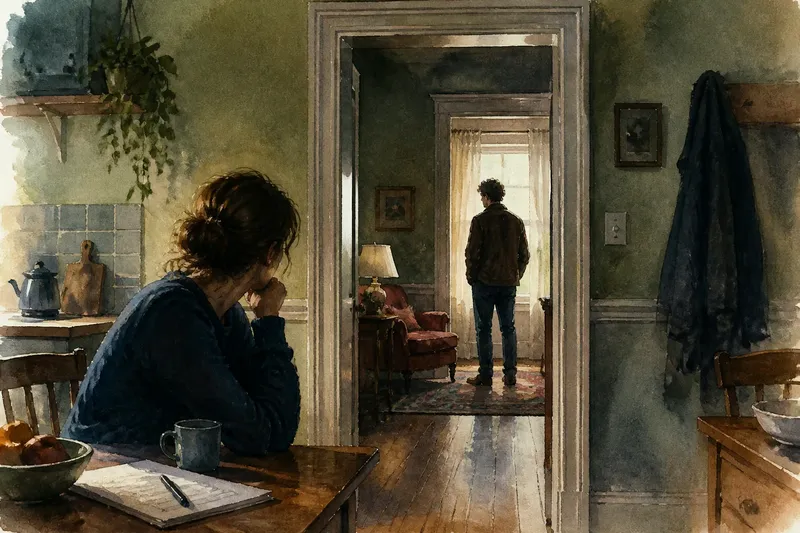
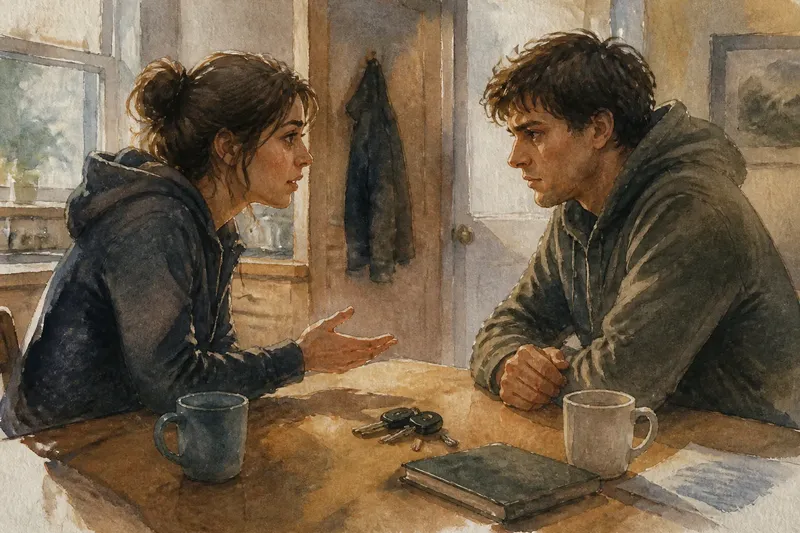
Pick a scene that can be understood without an elaborate plot recap. A conversation at a kitchen table, a visit to a workplace, or a brief exchange in a car can all work if one person appears to want something from another. A scene with a clear entrance, request, obstacle or decision gives you visible points to follow.
For a first pass, avoid scenes where the central action depends on a surprise you have not yet seen, or on dialogue you cannot hear clearly. Those can be rewarding later, but they encourage you to chase missing information rather than track a changing aim. A familiar film is often a good choice because you can give attention to the scene instead of trying to keep up with the plot.
Set a modest boundary before you press play: choose one scene and stop when it ends. Replaying the same exchange is enough. You do not need to turn the evening into a full-film analysis or pause after every line. The value comes from comparing a few clear observations, not collecting a complete inventory.
How should the first viewing work?
Watch the scene without pausing. Let the film establish its own rhythm; do not try to write down every line or name every camera movement. When it ends, answer three questions in a sentence or two:
- Who seems to want something from whom?
- What immediate result would count as success for that character?
- What is stopping them from getting it at the start?
Keep your answer concrete. “She wants him to stay until morning” is easier to check against the scene than “she wants connection”. The broader interpretation may eventually be right, but it is not yet the most useful viewing tool. A specific aim gives you something to compare with the character’s choices.
Then note the first tactic. Does the character ask directly, make a joke, offer a favour, or wait for the other person to speak? Do not judge whether the tactic is sensible. Just record what is observable. In this first pass, the line between a tactic and a new goal may remain uncertain; that is a reason to replay, not a problem to fix immediately.
What changes on the second viewing?
Replay the scene with your first guess in mind. Watch for the moment when the character’s route changes, or when a reaction gives them new information. A refusal may prompt a different appeal. An unexpected kindness may make a character hesitate. A silence may reveal that the other person is not going to answer the question as asked.
Pay attention to the exchange, not just the person pursuing the goal. A character’s aim becomes visible through the other person’s effect on them: a glance that interrupts a speech, a hand withdrawn from an offered object, or a reply that changes the subject. These are not automatic clues with one fixed meaning. They are moments to test against what happens next.
Pause only if a particular shift is hard to hold in mind. Ask whether the character is still pursuing the same result with a new tactic, or now wants something different. If the answer is unclear, leave it open. The scene may intentionally keep the character’s motive mixed, or may offer too little evidence for a firm distinction.
Say you choose an invented scene in which Mara asks her brother to lend her his car. On the first viewing, you note that she wants him to agree before he leaves. On the replay, he mentions that he needs the car to collect their father, and Mara stops bargaining and asks whether she can go with him instead. The observable shift is not simply that he refuses: his reason changes what she is asking for, from access to the car to a place in the journey.
Should you focus on dialogue, performance or editing?
There are three useful ways to organise the replay, and none is best for every scene. Choose according to what carried your attention on the first pass. You can follow the wording of the exchange, the performers’ physical responses, or the points where the film cuts between them. Each approach can help you locate a change in the goal without turning the rewatch into a technical survey.
When is dialogue the clearest route?
Choose dialogue when the scene turns on a request, promise, excuse or refusal. Listen for how the wording changes: a direct ask may become a joke, or a question may be recast as an offer. This approach suits scenes where the character’s tactics are spoken aloud, though a line’s meaning still depends on how the other person receives it.
When should you follow performance?
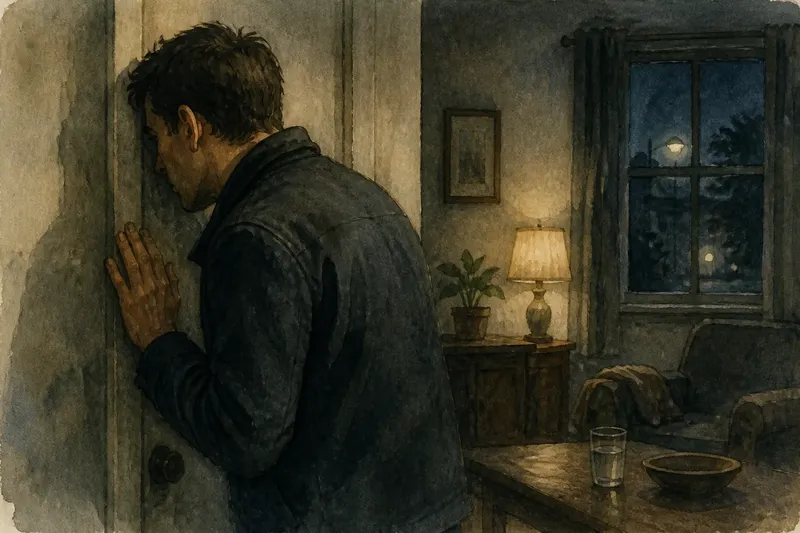
Choose performance when words stay polite but the encounter feels unsettled. Watch for a character beginning a gesture and stopping, turning towards the door, or holding back a response. This suits restrained scenes where a change in the body may precede a change in the spoken strategy; treat any single gesture as evidence to consider, not a secret code.
When does editing help most?
Choose editing when the scene repeatedly shifts attention between speakers or objects. Notice what the cut lets you see after a request: the listener’s face, the waiting hand, or an object that has become newly important. This suits exchanges in which the order and timing of reactions shape how you read the goal, but the cut alone cannot tell you exactly what a character intends.
To choose, ask what you could describe most clearly after the first viewing. If you remember the exact wording, follow dialogue. If you remember a hesitation or movement, follow performance. If you remember when your attention moved from one person or object to another, follow editing. You can change approach on another evening, but there is little benefit in forcing all three into a single replay.
What questions help keep the rewatch focused?
What is the difference between a goal and a tactic?
The goal is the immediate result the character wants; a tactic is an action intended to reach it. A character might want an apology and try first to make the other person laugh, then to describe the harm plainly.
Can a character have more than one goal in a scene?
Yes. A person may want to leave while also trying to protect someone from embarrassment. Track the aim most strongly connected to the exchange you chose, and note a secondary aim only when it changes what the character does.
What if I cannot tell whether the goal changed?
Record the last clear goal and the moment that made you uncertain. The character may have changed tactics, received new information, or started pursuing a different result; the scene may not settle which reading is right.
Should I pause to analyse every reaction?
No. Watch continuously first, then pause only at a moment where a response seems to redirect the encounter. Too many interruptions can break the timing that makes the response meaningful.
What should you write down afterwards?
Keep a compact note with four parts: the character’s initial goal, their first tactic, the moment that shifted the exchange, and what they appeared to want by the end. Add a question mark where the evidence remains uncertain. This is enough to preserve the scene’s movement without turning your notes into a transcript.
Compare the start and end rather than trying to name a grand theme. Did the character get what they asked for? Did they settle for something else, discover a new obstacle, or leave with the same aim but a different understanding of the other person? A scene can alter a goal even when nobody states a new one aloud.
Do not spend effort identifying every shot size or assigning a psychological meaning to each glance unless that detail helps explain the change you noticed. Technical vocabulary can be useful when it clarifies attention, but it is not a substitute for describing what happens. “The cut stays with the listener after the question” is more helpful than a label that does not connect to the exchange.
For a one-scene rewatch for following a character’s goal, the most useful result is a sharper question about the character’s next move. If the scene leaves you wondering what they will ask for now, or whether they will keep asking at all, you have followed its change in direction closely enough. Leave some ambiguity intact; a scene can be precise about what a character does while remaining open about why.